

-
Home

-
News
- Latest News
Latest News
- Details
- Hits: 4709
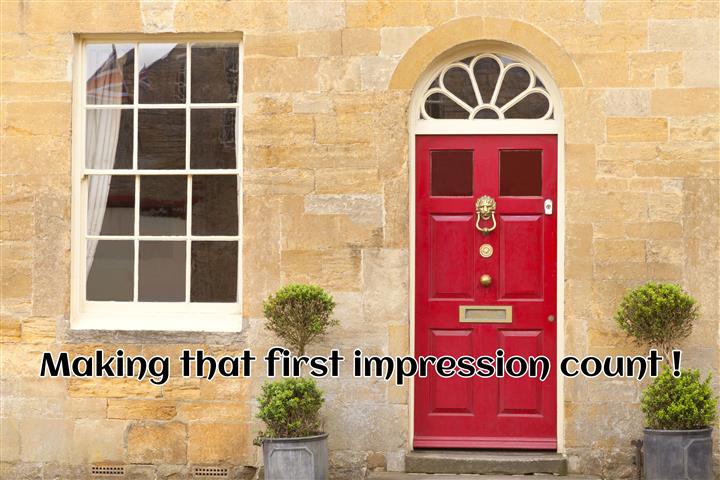
We all know how important first impressions can be in life, people, places, smells and the feel of somethings, it a “ gut “ reaction, and this is certainly true when it comes to putting your property on the market.
The initial impression of a property and its surrounding area can have a huge impact on potential buyers.
What is / What does “Kurb appeal” even mean ?
Well in essence its that drive by, first impression; how does the property look. and feel. Having a strong kerb appeal can make your home a much more attractive option for buyers.
Kerb appeal is important as it can be a decisive factor for potential buyers. According to the HomeOwners Alliance, 68% of all buyers say that they are swayed by their initial impression of a property, and that it has a lasting effect on their perception of it.
Even if you aren’t looking to sell your property immediately, giving the exterior of your house a tidy up, or redesign can make it feel more homely and add a more welcoming presence to any visitors, or passers-by. It will also save you a job for when you decide to put your property on the market, as kerb appeal can have a significant impact on potential buyers.
Ways to improve kerb appeal
Revamp the front door The front door of your home is the main focal point as your potential buyer approaches the property, you need it to look appealing. A damaged front door, or one that is in a poor state of repair will likely be an instant red flag for buyers, and could stop a viewing, or at least give an impress, saying “ if it looks poor from outside, what the inside like…….well, not for me, I’m looking for a well kept home”
Giving your front door a fresh coat of paint can help to bring your property to life. With a nice-looking entrance point, perhaps a handing basket, or some pots, winter or summer, buyers are more likely to have a positive first impression and be more inclined to keep that perception throughout the rest of the viewing.
Give driveways and patios some attention
As driveways and patios will likely be part of the first area people see / pass through, it’s important that they are maintained and kept looking good. Paths, driveways and patios can get grubby over time, so they need to be cleaned every once in a while. For larger areas, it’s a good idea to use a pressure washer to clean off any dirt or grubbiness. Being over run with weeds, also not good, again a few minutes work can make a massive difference to the look.

Hide the rubbish bins
Of course, every household needs bins, but it can’t be denied that they aren’t exactly appealing. If you don’t have anywhere to store your bins, it could be worth purchasing a bin shed to store them in. As Acres will, make sure your agent gets them out of the way for the pictures, and the car off the drive, you’d be amazed how many Agents don’t, thus not really assisting the seller with that first impression.
Make pathways tidier
Similarly to driveways and patios, it’s important that pathways around the outside of your house are maintained and kept in a good condition. You easily can give pathways a clean down with a power washer or a scrubbing brush and hot water. You should also make sure that your pathways are free of potholes or bumps, so it’s accessible for people in wheelchairs as well as families with pushchairs.
Improve exterior paintwork
If the exterior of your house is looking worn or damaged, it is highly recommended that you give it a touch up, or new coat of paint. A freshly painted house can improve its aesthetic and therefore its kerb appeal ten-fold. Touching up the exteriors of window frames with a new coat of paint can also add a bit extra to your home and leave it looking pristine from the outside.

Fix broken gutters, gates and fences
Damaged gutters, unhinged gates and broken fences are all likely to give off a negative perception to any potential buyer, so it’s essential that these details are fixed. Taking time to fix these problems yourself can make your home look more presentable whilst also adding additional security for your property.
Clean windows
This is a simple job you can do which will make the exterior of your home look much cleaner. You can either give it a go yourself or hire window cleaner, either way, having fresh shining windows will add more kerb appeal to the exterior of your property.
Keep on top of vegetation and lawns
Overgrowing vegetation can leave your garden looking untidy so giving any bushes, vegetation and grass a cut can leave your outdoor space looking more presentable. Trimming any tall bushes or trees you may have will also allow more light into your garden which is more welcoming to any potential buyers you have that are coming to view the property.
Refresh gravelled areas
Gravelled areas can easily be diminished over time and can be left looking bare or unfinished. Adding in some new gravel to paths or driveways can add a more finished look to your outdoor area. Using a garden rake to even out the gravel and get rid of any bumps or holes can make easy work of the job.
If you have a visible garage door, consider upgrading it to a more aesthetically pleasing one. Alternatively, you can paint the existing door to freshen its look
So, in summary poor kerb appeal can dissuade a potential buyer before they have even stepped foot in the property. Remember, the exterior of the property is the very first thing the buyer will see. In a worst-case scenario, the buyer may not even choose to go inside the property.
You are not going to attract the same pool of potential buyers if your home doesn’t have much appeal. Potential buyers could be immediately put off just when looking through the photos of your home on line if the kerb appeal is poor.
If you would like to discuss selling your home, our proactive approach and ideas please get in touch with us; This email address is being protected from spambots. You need JavaScript enabled to view it. or call any of our busy, helpful teams/offices:
Four Oaks 0121 323 3088
Sutton Coldfield 0121 321 2101
Walmley 0121 313 2888
Great Barr 0121 358 6222
Lettings 0121 312 4997
Thank you for reading our latest article, your interest in Acres, and our property for sale.
Nigel & Jayne Deekes – Acres Partners
- Details
- Hits: 3368

After several years of turbulence, the last 12 months have finally brought the first signs of calm to interest rates and the housing market. Inflation has fallen sharply from its peak, the Bank of England has started to cut rates, and while the property market is certainly not booming, it is beginning to look more stable and predictable.
For owners, buyers and investors across the West Midlands, the key questions now are: where will interest rates go next, and what does that mean for house prices and activity over the coming year?
The interest rate journey over the last 12 months
In late 2024, the Bank of England base rate was 4.75%, already down from the peak of 5.25% reached in August 2023. Since then, the Bank has delivered a series of measured cuts as inflation has eased and the economy has slowed.
November 2024: base rate at 4.75%
February 2025: cut to 4.50%
May 2025: cut to 4.25%
August 2025: cut to 4.00%
November 2025: held at 4.00%
Inflation, which had been well into double digits at its peak, is now running at about 3.8%, still above the Bank’s 2% target but moving in the right direction.
In short: we have moved from an emergency “put the brakes on” phase to a cautious “gently easing off” phase, with the Bank clearly alive to the risk of cutting too quickly and reigniting inflation.

What this has meant for mortgages and borrowing
Mortgage markets tend to move ahead of the Bank of England. Lenders began shaving fixed rates as soon as it became clear that base rate had peaked, and although costs remain higher than in the ultra-low rate era, the worst of the shock appears to be behind us.
Tracker and variable-rate borrowers have seen their payments ease slightly with each cut, while new fixed-rate products are now generally cheaper than they were 12–18 months ago.
For buyers, the combination of lower rates and a cooler market has improved choice. For existing owners, the picture is more mixed: the pressure is easing, but we are not going back to the days of 0.1% base rate.
The North Birmingham property market in 2025
Against that backdrop, the housing market has been surprisingly resilient.
Official Land Registry figures show that, as of August 2025, average house prices across the West Midlands were around £250,000, up 3.7% on the year.
Independent analysis puts the average property price in the wider West Midlands region slightly higher, at around £279,000, with prices up about 2% over the last 12 months, although transaction volumes are down by nearly 13%.
Nationally, the picture is similar: the UK House Price Index shows average prices up around 3% year-on-year, while Zoopla’s index reports a smaller rise of about 1.3% over the year to September 2025.
Demand, however, is patchy. RICS data for the West Midlands shows a negative net balance for new buyer enquiries in late summer, indicating that more agents are seeing a slight fall in demand than a rise.
At the same time, the rental market remains strong: in Birmingham, average private rents rose by just over 5% in the year to September 2025, supporting yields for landlords.
Where next for interest rates?
Looking ahead, most economists and market forecasters expect interest rates to edge down gradually. Recent commentary suggests there is a good chance of another quarter-point cut from 4.0% at the Bank’s meeting in December 2025, if inflation continues to cool.
Several major banks and research houses expect base rate to be somewhere in the region of 3.75%–3.25% during 2026, depending on how inflation and growth evolve.
For practical purposes, that means the next 12 months are likely to see:
A gently falling path for rates rather than a dramatic return to rock-bottom borrowing cost. A continued emphasis on affordability checks and sensible underwriting from lenders.
House price forecasts are always an educated guess, but most reputable forecasters now expect modest nominal growth over the next couple of years rather than big swings.
Here at Acres we are projecting low growth in 2026 of perhaps 2-4% eith stronger pockets where demand is resilient and stock is tight.
Transaction volumes remaining below long-run norms, but stabilising as rate cuts slowly improve affordability and confidence. Continued strong rental demand, supporting investor interest in well-located houses and family properties.

What this means for buyers, sellers and landlords
For buyers, the coming year may represent a window of opportunity. Competition is more measured, there is usually more choice than in a boom market, and the direction of travel for interest rates is gently downward.
For sellers, realism is key. The market is not in “panic mode”, but buyers are price-sensitive and have options. Well-presented, correctly priced homes in popular areas will still attract strong interest, but ambitious over-pricing is more likely to lead to stagnation. Flexibility on timing and negotiation will remain important.
For landlords and investors, the picture is cautiously positive. While higher rates have squeezed some highly leveraged landlords, easing borrowing costs combined with firm rental growth should improve net yields over time. Demand for quality rental property in and around Birmingham and the wider West Midlands remains robust, particularly for good family homes and properties near transport links and employment hubs.
Are you considering moving home? If you would like to discuss selling your home, please get in touch with us This email address is being protected from spambots. You need JavaScript enabled to view it. or call any of our busy, helpful teams / offices :
Four Oaks 0121 323 3088
Sutton Coldfield 0121 321 2101
Walmley 0121 313 2888
Great Barr 0121 358 6222
Lettings 0121 312 4997
Mortgages 0121 387 1616
Thank you for reading this article, and your interest in Acres and our property for sale.
Nigel & Jayne Deekes – Acres Partners
- Details
- Hits: 1459

When it comes to moving home, every buyer has a wish list — whether it’s a stylish open-plan kitchen, a sun-drenched garden, or that ever-practical downstairs loo. But what features are really drawing in today’s home-hunters?
We’ve looked at recent trends across of thousands of property searches to uncover the most in-demand features for buyers in today’s market. Here’s what’s topping the charts — and what you might want to highlight if you’re considering selling your home.
1. Space to Renovate
Buyers continue to fall in love with potential. Listings described as “renovation project” or “scope for alteration / modernisation” are seeing huge demand — especially as they often come with a more accessible price point. Savvy purchasers are looking to add value and personalise their homes, particularly in areas with strong resale potential like the general Sutton Coldfield, Four Oaks and Great Barr areas.
2. Open-Plan Living
Whether it’s for entertaining friends or keeping an eye on the children while cooking, open-plan layouts remain top of the list. Buyers want flexible, light-filled spaces where kitchen, dining and living areas blend seamlessly.

3. Home Office / Study
Hybrid working is here to stay. A separate study, converted loft, or even a dedicated garden room is now seen as a real asset. This is especially desirable in properties to ensure the main living space isn’t compromised by working from home.
4. Off-Road Parking & Driveways
Increased car ownership and tighter parking controls make a private driveway or garage a major selling point. In areas like Walmley, Streetly and Great Barr, off-road parking often adds significant appeal — especially to family buyers. Another factor becoming ever more important is of course the ability to charge an electric car at home on your drive.
5. Modern Kitchen
The kitchen is still the heart of the home. Buyers are drawn to stylish, modern kitchens with integrated appliances, ample storage and that all-important island or breakfast bar for casual dining and entertaining.A fitted kitchen with the wow factor really does make a difference, both to the comfort of home living and of course it's always lovely to have that super impressive room for guests !

6. Downstairs WC or Shower Room
Particularly popular with families and multi-generational households, a downstairs WC is more than a convenience — it’s a must-have. If space allows, adding one can instantly boost your property’s value and appeal.
7. Bi-Fold or French Doors to the Garden
The desire for indoor-outdoor living continues to grow. Homes with bi-fold or French doors opening onto a patio or deck are seen as more connected to the garden — ideal for summer entertaining or simply enjoying more natural light.
8. Garden Space
Post-lockdown, outdoor space has become more important than ever. Whether it’s a south-facing lawn, a landscaped patio or a low-maintenance courtyard, gardens remain high on the priority list — especially for buyers with children or pets.
9. Energy Efficiency
With rising utility costs, EPC ratings and energy-saving features like double glazing, modern boilers and insulation are increasingly scrutinised by buyers. Solar panels or EV charging points are starting to become “future-proof” features too.

10. Proximity to Good Schools
A perennial favourite – especially in our part of the Midlands – properties close to sought-after primary and secondary schools continue to command a premium. Whether it’s catchment for Bishop Vesey’s, Arthur Terry or Sutton Girls, or indeed, the many other impressive junior and senior schools in the area, school proximity plays a crucial role in many purchase decisions.
A Market Poised for Positivity - 2026 ?
After a cautious couple of years marked by rising interest rates and wider economic uncertainty, the local housing market is resilient, over the past 18 months months, buyer activity has strengthened, particularly across mid-range family homes and properties offering long-term value.
Looking ahead to 2026, early indicators are encouraging: mortgage rates are expected to continue easing, there si confidence in to the market, and buyer demand remains strong across the West Midlands. With many homeowners having delayed moving in recent years, we anticipate increased activity from both upsizers and downsizers — making it an ideal time to consider your next move.
Thinking of Selling?

If your property ticks some of these boxes, now may be the perfect time to consider marketing. At Acres, we know what today’s buyers are looking for and how to highlight your home’s best features — from strategic Rightmove listings to professional photography and floorplans.
Want more tips and advice? We love being able to help! Acres Estate Agents are your local, family owned and run property experts for the Sutton Coldfield and Great Barr areas. Call your local office on the numbers below or email This email address is being protected from spambots. You need JavaScript enabled to view it. to find out how we can help you.
Want to check how much your home is worth? You can get an Instant Valuation here.
If you would like to discuss selling your home, please get in touch with us This email address is being protected from spambots. You need JavaScript enabled to view it. or call any of our busy, helpful teams/offices:
Four Oaks 0121 323 3088
Sutton Coldfield 0121 321 2101
Walmley 0121 313 2888
Great Barr 0121 358 6222
Lettings 0121 312 4997
Mortgages 0121 387 1616
Thank you for reading this article, and your interest in Acres and our property for sale.
Nigel & Jayne Deekes – Acres Partners
- Details
- Hits: 1058

With the introduction of the Renters’ Rights Act 2025, effective from 1 May 2026, the private rental sector in England is undergoing its most significant reform in decades.
While much focus has been placed on rent increases, equally important are the sweeping changes to evictions and possession rights, particularly the abolition of so-called “no-fault” evictions. For landlords, this represents a shift towards a more structured, evidence-based and legally robust system. For tenants, it delivers increased security and stronger protections.
Key Changes at a Glance
From 1 May 2026:
- Rent increases limited to once per year, with 2 months’ notice
- No rent increase permitted in the first 12 months
- Section 13 notices mandatory for all rent increases
- Section 21 ‘no-fault’ evictions abolished
- All evictions must now be carried out via Section 8 grounds
- Tenancies move to periodic (rolling) agreements by default
- Tenants have greater rights to challenge both rent and eviction
The End of Section 21: A Fundamental Shift
Perhaps the most significant change is the abolition of the Section 21 Notice. Previously, Section 21 allowed landlords to regain possession of a property without providing a reason, typically by giving two months’ notice.
From 1 May 2026:
- Section 21 notices are no longer permitted
- Landlords cannot evict tenants without a valid legal reason
- All possession claims must follow a formal legal process
This marks the end of “no-fault evictions” and fundamentally changes how landlords manage tenancies.

How Landlords Can Now Evict Tenants
From May 2026 onwards, landlords must use a Section 8 Notice, which requires a specific legal ground for possession.
In simple terms:
👉 You can still regain possession—but you must have a valid reason and be able to evidence it.
Common Grounds for Possession (Section 8)
The Renters’ Rights Act expands and strengthens the grounds available to landlords. These broadly fall into two categories:
1. Tenant Fault Grounds
These relate to tenant behaviour or breaches:
- Rent arrears (persistent or serious)
- Anti-social behaviour
- Damage to the property
- Breach of tenancy agreement
These grounds often remain similar to the existing framework but are expected to be more clearly defined and enforceable.
2. Landlord-Led Grounds (No Tenant Fault)
Importantly, the Act still allows landlords to regain possession for legitimate reasons, including:
- Intention to sell the property
- Landlord or close family member moving in
- Major refurbishment or redevelopment
These are typically mandatory grounds, meaning that if proven, the court must grant possession. However, safeguards are in place. For example:
- If evicting to sell, landlords may be restricted from re-letting the property for a period if the sale does not proceed
- Evidence will be required to demonstrate genuine intent
Notice Periods and Legal Process
Unlike the previous Section 21 route, eviction is now more formal and structured. Landlords must:
- Serve a valid Section 8 notice stating the specific ground(s)
- Provide the correct notice period (varies depending on the ground)
- Apply to the court if the tenant does not vacate
- Obtain a possession order before enforcement
This means that, in most cases, eviction will now involve court proceedings, rather than a simple notice period.
Transitional Arrangements
- Section 21 notices served before 1 May 2026 may still proceed, provided they are valid
- After this date, no new Section 21 notices can be issued
This creates a clear cut-off point for the old system.
What This Means for Landlords
The removal of Section 21 significantly changes risk management within lettings:
Greater Emphasis on Tenant Selection
With fewer “easy exit” routes, choosing the right tenant becomes even more critical.
Stronger Documentation Required - Landlords must ensure:
- Full compliance with legal obligations
- Accurate record keeping
- Clear evidence supporting any eviction grounds
Longer Timelines - Evictions may take longer due to:
- Court involvement
- Increased scrutiny
- Tenant rights to challenge

Rent Increases Still Require Careful Handling
Alongside eviction reform, rent increases are now tightly controlled:
- Limited to once per year
- Must reflect true market value
- Require a formal Section 13 notice
- Can be challenged at tribunal
This reinforces the need for a balanced, evidence-based approach.
The Role of a Letting Agent Has Never Been More Important
With both rent increases and evictions now forming part of a regulated legal framework, professional guidance is essential. A good letting agent will:
- Ensure full legal compliance
- Advise on appropriate rent levels
- Handle Section 13 and Section 8 notices correctly
- Provide market evidence for tribunals
- Support landlords through possession proceedings
In short, the margin for error has reduced—and the cost of getting it wrong has increased.
Final Thoughts
The Renters’ Rights Act represents a major rebalancing of the private rental sector. Landlords retain the ability to increase rent and regain possession, but only where:
- The correct legal process is followed
- Decisions are justified and evidence-based
- Tenants are treated fairly and transparently
Those who adapt to this more professionalised environment will continue to perform strongly. Those who rely on informal or outdated practices will increasingly face challenges.
This article has been adapted and expanded from original content provided by Zoopla.
Here at Acres, we understand the importance of finding the right property that meets your needs and wants. Our experienced team will help guide you through the buying or selling process and answer any questions you may have.
Contact us today to learn more about how we can help you find your dream home. https://www.acres.co.uk/contact-us
Are you thinking of selling your property and want to check how much your home is worth? You can get an Instant Valuation here.
If you would like to discuss selling your home, please get in touch with us This email address is being protected from spambots. You need JavaScript enabled to view it. or call any of our busy, helpful teams/offices:
Four Oaks 0121 323 3088
Sutton Coldfield 0121 321 2101
Walmley 0121 313 2888
Great Barr 0121 358 6222
Lettings 0121 312 4997
Thank you for reading this article, and your interest in Acres and our property for sale.
Nigel & Jayne Deekes – Acres Partners
Acres; proud to be family owned, managed, run and to have been serving the North Birmingham community for 34 years.
- Details
- Hits: 1027

As a long-established, family-owned and run estate agency serving the local areas Acres is committed to keeping our clients fully informed about changes that may affect the property market.
Chancellor Rachel Reeves has now delivered the Autumn Budget, setting out tax measures aimed at addressing a reported £20bn fiscal shortfall. Following months of speculation around potential sweeping property tax reforms—including rumours of new annual taxes on homes over £500,000, changes to capital gains tax, and levies on rental income—the final announcements have proved more limited than anticipated.
Below is our summary of the key points and what they could mean for the market locally and nationally.
1. Landlords: 2% Increase in Income Tax on Rental Income (from April 2027)
Landlords will see property income tax rates increase by 2%, meaning the new rates will be:
-
22% basic rate
-
42% higher rate
-
47% additional rate
This builds on last year’s rise in stamp duty on additional homes (from 3% to 5%) and comes alongside incoming regulatory requirements under the Renters’ Rights Act and enhanced energy efficiency rules.
How this may affect the rental sector:
-
Net returns for landlords will fall further after several years of increased costs.
-
Some landlords may look to increase rents, which are already 25% higher than five years ago.
-
Others—particularly those with smaller portfolios—may choose to exit the market, adding supply to sales but tightening rental availability.
At Acres, we anticipate continued pressure on supply, which remains a significant driver of rental prices both locally and nationally.
2. Stamp Duty: No Changes Announced
Despite intense speculation—especially rumours of a new annual charge on homes valued over £500,000—the Chancellor confirmed no changes to the stamp duty system.
This provides stability:
-
Buyers will continue to pay stamp duty on homes over £125,000.
-
First-time buyers retain relief up to £300,000 on purchases up to £500,000.
-
Sellers will not be forced to adjust pricing strategies to absorb an annual tax.
Although the system remains unchanged, it is worth noting that stamp duty price bands were set a decade ago, meaning average buyers are paying more over time as property values have increased.
3. When Will the Market Feel These Changes?
The phased introduction of policy changes means that the wider impact will unfold gradually:
-
Landlord income tax increases: April 2027
-
Mansion tax: April 2028
With uncertainty now lifted, many home-movers can plan with more confidence. Although the very top end of the market may pause for reassessment ahead of the 2028 surcharge, the majority of UK households remain unaffected by the new measures.
In Sutton Coldfield and surrounding areas, where most transactions are comfortably below the £2 million mark, we expect activity to stabilise rather than slow, with continuity in stamp duty helping restore momentum.

4. ‘Mansion Tax’ Introduced for Homes Worth Over £2 Million (from April 2028)
A new annual surcharge—informally referred to as a mansion tax—will apply to homes valued above £2 million. This is payable by the owner, not the occupier, and is charged in addition to council tax.
Annual surcharge bands:
| Property Value | Annual Charge |
|---|---|
| £2.0–2.5m | £2,500 |
| £2.5–3.5m | £3,500 |
| £3.5–5.0m | £5,000 |
| £5m+ | £7,500 |
The government will carry out a targeted valuation exercise every five years to determine which band applies.
Nationally, only a small proportion of properties fall within this threshold, and the impact will be concentrated primarily in London and the South East, where higher-value homes are more common.
However, as with most taxation affecting the upper end, there is a likely trickle-down effect that can influence buyer behaviour below these thresholds. Markets may edge slower, particularly as we approach the 2028 implementation date.
Acres View
At Acres, we believe that stability, clarity, and confidence are essential for healthy market activity. While certain aspects of the Budget introduce additional cost pressures, particularly for landlords and the premium sector, the absence of major changes to stamp duty will be welcomed by the majority of movers.
Whether you're considering selling, buying, renting, or investing, our experienced team across all four offices is here to offer honest, informed advice tailored to your circumstances.
Want more tips and advice? We love being able to help! Acres Estate Agents are your local, family owned and run property experts for the Sutton Coldfield and Great Barr areas. Call your local office on the numbers below or email This email address is being protected from spambots. You need JavaScript enabled to view it. to find out how we can help you.
Want to check how much your home is worth? You can get an Instant Valuation here.
If you would like to discuss selling your home, please get in touch with us This email address is being protected from spambots. You need JavaScript enabled to view it. or call any of our busy, helpful teams/offices:
Four Oaks 0121 323 3088
Sutton Coldfield 0121 321 2101
Walmley 0121 313 2888
Great Barr 0121 358 6222
Lettings 0121 312 4997
Mortgages 0121 387 1616
Thank you for reading this article, and your interest in Acres and our property for sale.
Nigel & Jayne Deekes – Acres Partners


